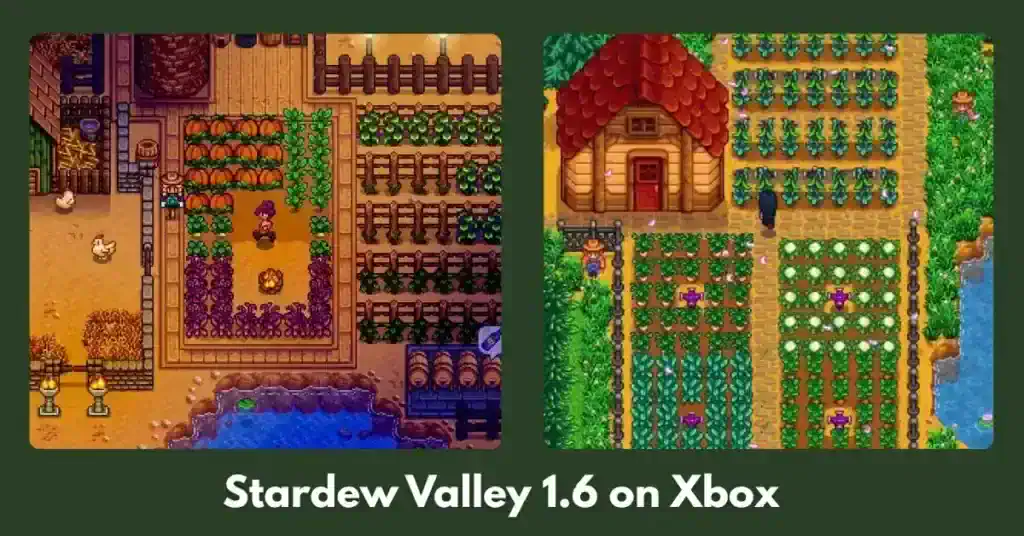
We are constantly discovering new ways players push the limits of Stardew Valley, but few experiments are as intriguing as the concept of “sleeping” through centuries in-game. One dedicated fan has taken this idea to the extreme—skipping 1,000 in-game years—only to awaken and find their once-organized farm transformed into a chaotic, overgrown wilderness.
This unique scenario has captured the community’s imagination, revealing hidden mechanics, long-term environmental behavior, and surprising limitations within the game’s simulation systems. It is not just a curiosity—it is a deep dive into how Stardew Valley evolves when left to its devices.
What Happens When You Skip 1,000 Years in Stardew Valley?
Understanding the “Sleep Through Time” Concept
In Stardew Valley, time progresses daily, with each day bringing changes to crops, weather, and NPC schedules. By repeatedly sleeping without performing any actions, players can effectively fast-forward through years of in-game time.
In this extreme case, the player:
- Avoided farming, harvesting, and maintenance
- Slept continuously for 1,000 in-game years
- Allowed the game world to evolve naturally without intervention
The result is a fascinating look at how the farm behaves when completely abandoned.
The Wild Farm: A Landscape Taken Over by Nature
Uncontrolled Growth and Environmental Chaos
After a millennium of neglect, the farm becomes nearly unrecognizable. Instead of neatly arranged crops and paths, players encounter:
- Dense clusters of trees cover nearly every tile
- Overgrown grass spreading uncontrollably
- Rocks, debris, and weeds dominating open spaces
- Fallen branches and natural clutter fill pathways
The farm essentially reverts to a fully wild state, resembling the early-game experience but amplified to an extreme level.
Nature Always Wins in the Long Run
This experiment highlights a core mechanic of Stardew Valley: nature continuously regenerates itself. Even if players clear land early in the game, leaving it unattended results in gradual reclamation by trees and debris.
Over 1,000 years, this process becomes exponential, turning the farm into a dense, almost impenetrable forest.
Crop Behavior Over Extended Time Periods
Do Crops Survive 1,000 Years?
One of the most surprising discoveries is that crops do not persist indefinitely. Since crops require seasonal maintenance and watering, they:
- Wither at the end of their season
- Do not regrow without player input
- Leave no lasting agricultural footprint
This means that after 1,000 years, no original crops remain, reinforcing the importance of active farming.
Maximize your gold with our seasonal profit breakdowns, then see how to spend that hard-earned wealth on the most efficient farmhouse upgrades or use your surplus to fund the launch of a global consultancy.
Perennial Features and Exceptions
Certain elements, however, do endure:
- Fruit trees may continue producing seasonally
- Some structures remain intact
- Greenhouse crops can survive if properly set up beforehand
These exceptions demonstrate that controlled environments can resist time, unlike the open farm.
Buildings and Farm Layout After 1,000 Years
Structures Stand the Test of Time
Interestingly, buildings such as barns, coops, and the farmhouse remain largely unchanged. The game does not simulate structural decay, meaning:
- Player-built structures persist indefinitely
- Interior layouts remain intact
- Upgrades are preserved
This creates a striking contrast between orderly buildings and chaotic surroundings.
Paths and Decorations Disappear
While buildings endure, decorative elements do not:
- Paths may become obscured by grass
- Fences degrade over time
- Carefully designed layouts vanish
This reinforces the idea that only permanent structures survive extreme time skips.
NPCs and the World Beyond the Farm
Pelican Town Remains Unchanged
Despite the massive passage of time, the broader world—including Pelican Town—remains static. NPCs:
- Do not age
- Maintain their routines
- Retain their original dialogue
This reveals a key limitation of the game: time affects the farm environment but not the world’s narrative structure.
“Top 10” list of “Farmhouse Redesign Mods“ that change the wood textures or layout styles to match a specific aesthetic (like “Industrial” or “Cozy Cabin”).
Gameplay Insights from This Experiment
The Importance of Maintenance
This 1,000-year scenario demonstrates that Stardew Valley is fundamentally about consistent care and interaction. Without player involvement:
- Farms deteriorate into wilderness
- Progress halts completely
- Systems reset to natural states
Long-Term Simulation Limits
While the game simulates environmental growth effectively, it does not model:
- Aging systems
- Economic shifts
- NPC evolution
This balance ensures the game remains stable but highlights its design boundaries.
Why This Stardew Valley Experiment Matters
A New Perspective on Game Design
This experiment provides valuable insight into how Stardew Valley handles:
- Environmental regeneration
- Persistence of player-built elements
- Long-term gameplay mechanics
It reveals that the game is designed for active participation rather than passive progression.
Community Creativity at Its Best
The Stardew Valley community continues to push the game in unexpected ways. Experiments like this:
- Inspire new gameplay challenges
- Reveal hidden mechanics
- Keep the game fresh years after release
How You Can Try This Experiment Yourself
Step-by-Step Approach
If you want to recreate this scenario:
- Start a new farm or use an existing save
- Avoid farming or interacting with the environment
- Sleep continuously for extended periods
- Observe changes after several in-game years
While reaching 1,000 years may take time, even a few decades can produce noticeable results.
Final thoughts
We find this 1,000-year sleep experiment to be a remarkable showcase of Stardew Valley’s environmental systems. It transforms a peaceful farming simulator into a study of nature’s persistence and the importance of player involvement.
The image of a once-thriving farm overtaken by wilderness serves as both a warning and a fascinating discovery. It reminds us that in Stardew Valley, progress is not permanent—it must be maintained.
This experiment not only entertains but deepens our understanding of the game, proving once again why Stardew Valley remains one of the most engaging and endlessly explorable simulation experiences available today.